Samsung’s TV strategy with The Frame was a 0→1 bet on a lifestyle category, where differentiation and revenue came not only from hardware sales, but also from the Art Store and subscriptions. The mobile companion needed to make personalization effortless—browse art, create from photos, and set up with ease—so The Frame felt like home décor.
As the lead UX designer, I partnered with the lead visual designer and the TV platform UX team to bring the Art Mode experience to mobile, shipping within the existing TV companion app’s IA to meet an aggressive launch timeline.
Many of the core workflows and interaction patterns introduced in 2017 were later carried forward when Samsung migrated Art Mode into its flagship SmartThings app.
End-to-End UX
Information Architecture
Cross-functional Collaboration
Design Handoff & QA
Year
Samsung
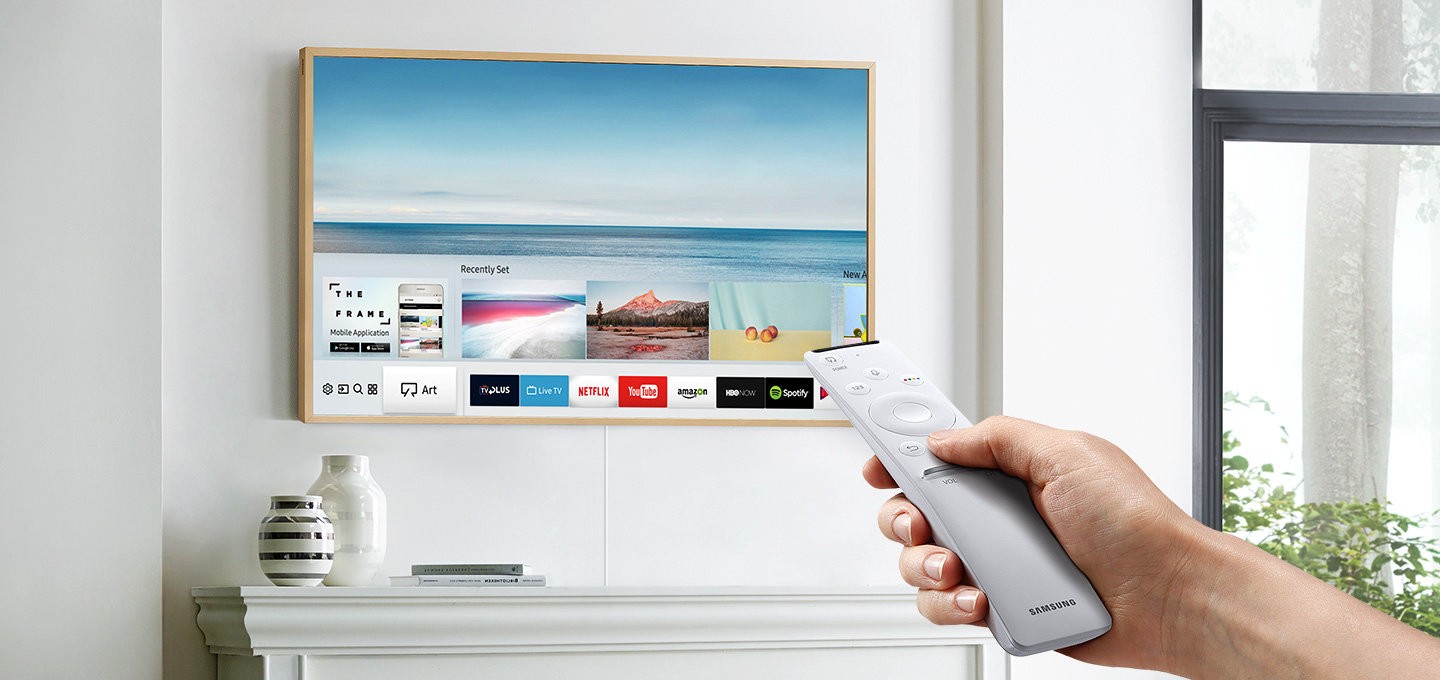
Frame TV and the companion app promotion
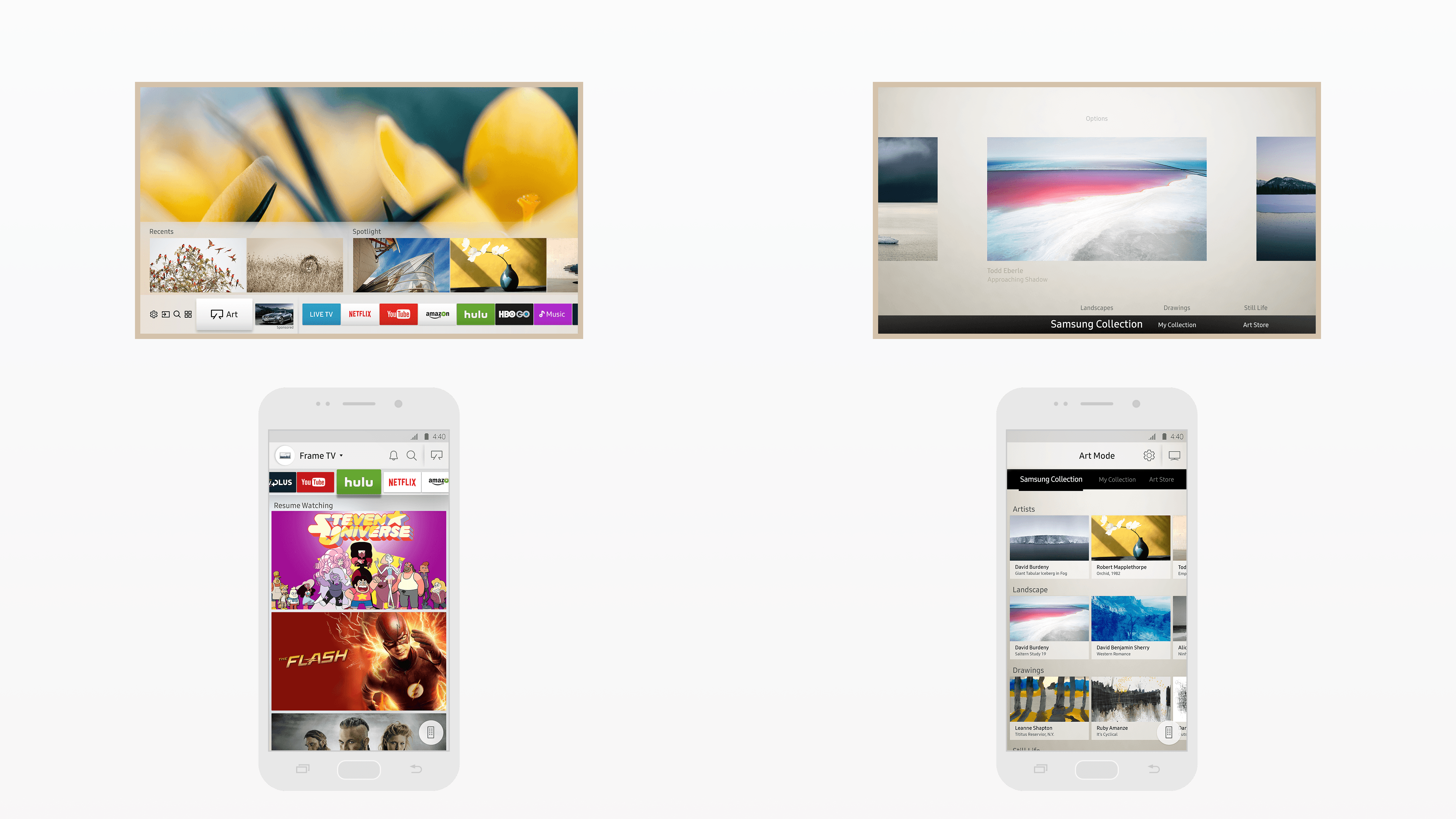
TV mode switching

Companion app key experience: Photos curation, collage creation and art store browsing (left to right)
The Challenge
We had to deliver an art-forward experience inside an existing utility TV companion app—without fragmenting the ecosystem with a separate download. We also had to solve the second‑screen mental model: customers needed clear control, state, and confirmation between phone and TV, which required tight alignment across the Frame TV, core companion app, and engineering teams to ship one coherent cross‑device interaction system.
Ecosystem simplicity
One companion app, multiple mental models
Phone attention vs. TV outcome
Clarity of control, state, and confirmation between phone and TV
Cross-team delivery
Align teams on shared interaction rules and scalable platform decisions
The Approach
Partnered with TV platform UX to translate Art Mode for mobile and identify mobile-native opportunities.
Aligned with the companion app team on when to reuse existing patterns vs. introduce new ones—protecting user mental models while keeping the platform scalable.
Key Design Decisions
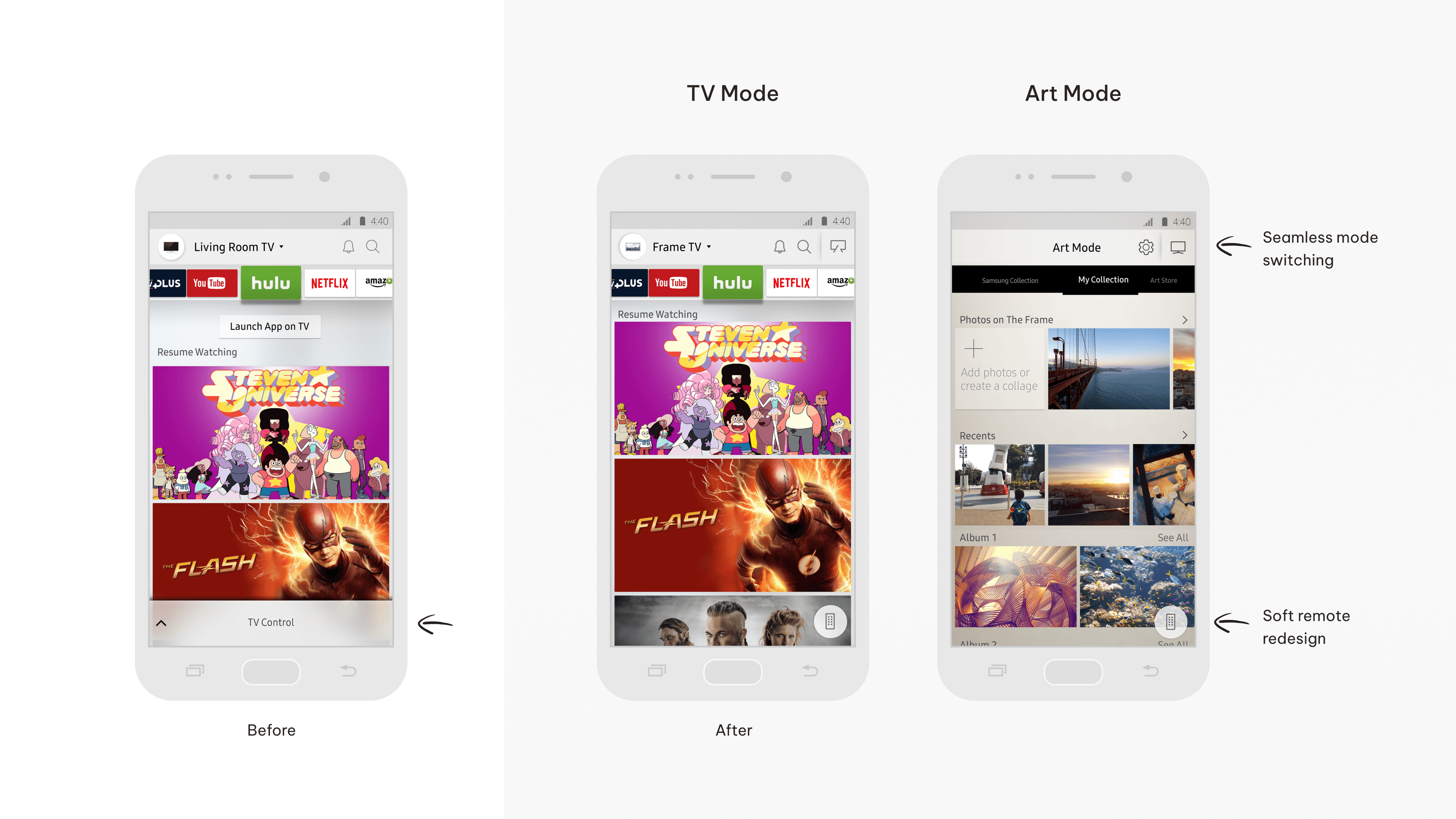
1 - Separate mindsets inside one app
Integrating Frame TV into Samsung’s existing companion app required clear navigation + IA that separates utility controls from Art Mode creation—because users come in with different intentions within a single app.
Outcomes
Shipped the Cross-Device Experience
Shipped Frame Mobile app as part of the Frame TV launch, enabling browsing, mobile-to-TV photo setup, and preview workflows that supported the “TV as décor” positioning.
Contribute to product bet validation
Frame TV later proved strong market demand for the lifestyle category (Samsung reported >1M units sold by 2021), validating the broader product bet.